

Vertical Form Fill Seal
Nuts & Dried Fruit Multihead VFFS
A nut-mix bag can be on weight and still hold the wrong ratio of ingredients. Configure this multihead VFFS line from your blend, coatings, target weight and bag size.
| Route & product form | Roll film or premade pouch | Inputs to send |
|---|---|---|
| VFFS Food, powders or liquids; confirm weighing or dosing. | Roll film formed into bags. | Product, fill weight, bag size and output. |
| Multi-lane stick pack Coffee, creamer or supplement powders; confirm auger dosing. | Roll film formed into stick packs. | Powder, fill weight, stick size and output. |
| Premade pouch Provide the product condition, target dose and production pouch samples for handling and filling review. | Purchased premade pouches. | Product, fill weight, pouch style, size and output. |
Use the packaging system comparison to review the routes, compare bag styles for the pack format, and prepare your packaging brief to record the inputs and undecided items.
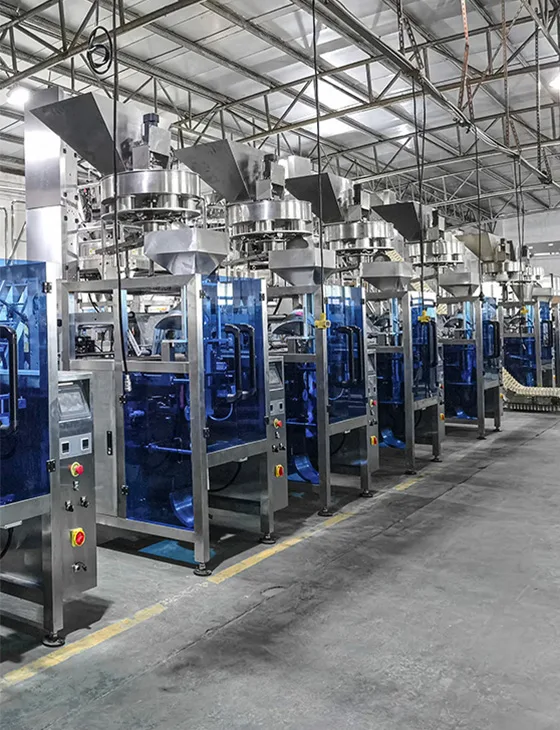
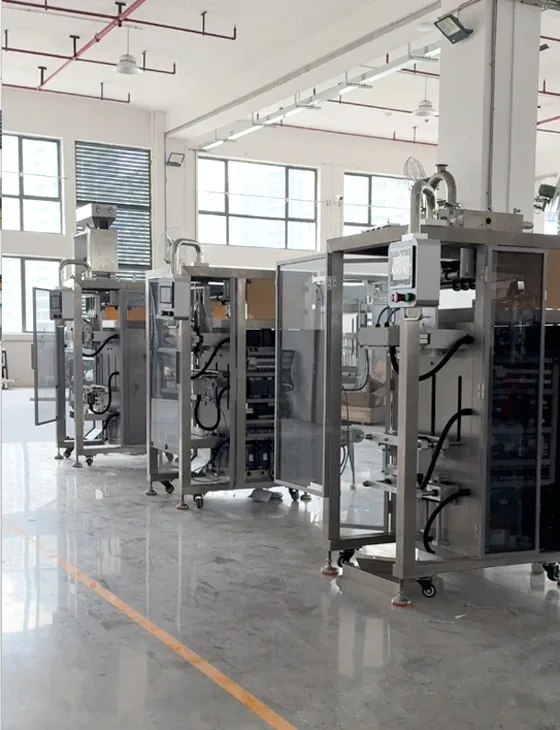
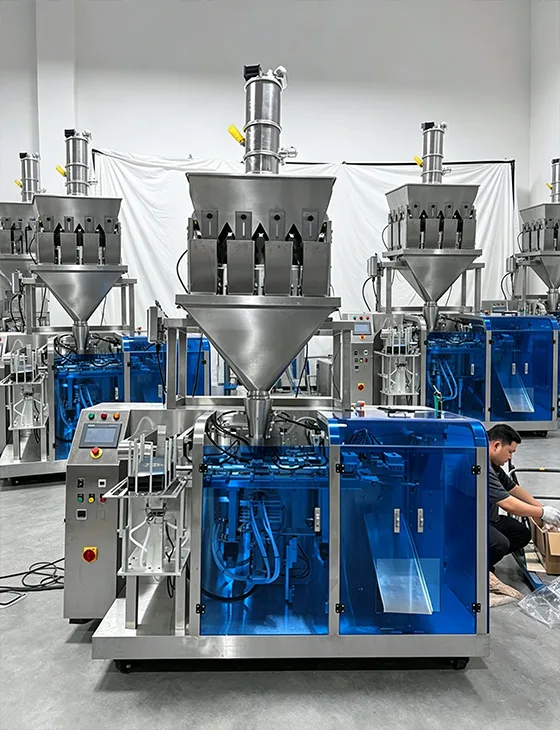
Vertical, multi-lane and premade-pouch equipment in our production workshops.
Explore configurations by material and pack format.
Vertical Form Fill Seal
A nut-mix bag can be on weight and still hold the wrong ratio of ingredients. Configure this multihead VFFS line from your blend, coatings, target weight and bag size.
Vertical Form Fill Seal
A misplaced or poorly attached degassing valve can spoil a run of coffee bags. Specify this weigher and VFFS valve line from your valve drawing, film, roast and weight.
Vertical Form Fill Seal
An inflated bag can hide broken chips, a short fill or a weak seal. Size this weigher, VFFS and nitrogen-flush line from your chip volume, breakage limit and gas supply.
Vertical Form Fill Seal
Frosted pieces retained in a hopper can leave a bag underweight and turn up in later fills. Specify this frozen-food weigher and VFFS line from product temperature, frost, piece size and cleaning method.
Multi-Lane Stick Packs
Four lanes can hide one lane that under-doses. Specify this four-lane collagen stick-pack machine from your powder density, serving weight and stick size, and sample every lane.
Premade Pouches
A valve or zipper too close to the pouch mouth catches beans and spoils the seal. Size this premade doypack line for coffee from your actual pouch, bean condition and fill weights.
How a vertical form fill seal (VFFS) machine forms bags from roll film, doses and seals each pack, and how to choose the filler, bag format and line.
Package single-serve coffee, creamer and supplement powders in parallel lanes with auger dosing and vertical stick-pack forming.
How premade pouch filling and packing machines pick, open, fill and seal ready-made stand-up, zipper and spout pouches, and how to compare them with VFFS.
VerticalPackingMachine manufactures packaging equipment that connects product feeding, weighing or dosing, bag forming, filling and sealing. Our range includes vertical form-fill-seal systems, multi-lane stick packs, sauce sachets and premade-pouch configurations. We develop the equipment scope around your material, package and production target, with product trials and acceptance checks defined for the selected configuration.
The wrong coffee route can leave dosing or pouch handling outside the quote. Start with beans or powder, then roll film or premade pouches.
A weight-only snack brief can miss breakage and bag-volume limits. Compare product size, occupied volume and incoming damage before choosing the line.
Nut, dried fruit and mixed-nut packaging machines: pillow bags, zipper pouches or vacuum bags, plus how to specify blends, oily and sticky pieces.
A correct candy bag weight can hide the wrong count or assortment. Specify the candy condition, acceptance target and roll-film or zipper-pouch route.
Grouping frozen pieces with fresh leaves can hide handling requirements. Define product state, volume and cleaning needs before selecting a bagging route.
Reusing powder tooling by product name can leave dose and stick volume mismatched. Assess collagen, coffee and creamer formulas separately.
A mismatched closure can leave sauce equipment incomplete. Compare sachet, premade and spout routes by filling condition; define product treatment separately.
Describe the material you want to pack. Add relevant handling, cleaning and packaging requirements.
Tell us the target weight per bag, including any range and the unit you use.
Share your preferred bag style, dimensions and film information, or explain what still needs to be decided.
State your target bags per minute or per hour and how many hours the line will run.
Send your product, bag weight, bag style, output target and destination country. It is fine to mark technical details as undecided.
Discuss the proposed machine and dosing equipment, utilities, options and the information needed to confirm suitability.
Request the agreed specifications, test conditions, included equipment, price and delivery terms in writing.
Confusing roll-film and finished-pouch responsibilities can leave a quote incomplete. Start with VFFS for forming from a reel, or premade handling for bought-in bags.
An ambiguous brief makes quotations hard to compare. Submit SKU conditions, a bag sample or drawing, accepted-output targets and factory constraints first.
A coffee format chosen without the product can require different dosing later. Compare bean bags first; review ground coffee separately and instant powders for sticks.
Start with vertical form-fill-seal or multi-lane stick pack if the pack will be formed from roll film. Start with the premade-pouch route if you will buy finished pouches. Compare the published systems and bag styles, then send the product, fill weight, dimensions and required output for configuration review.
Review the powders application and the vertical form-fill-seal or multi-lane stick-pack systems. The pack format and dosing requirements determine which configuration to discuss; the powder name alone does not select a machine. Provide the material description, fill weight, bag dimensions and output target.
Yes. Mark the bag style or dimensions as undecided and send the product, fill weight and output target. Use the packaging brief guide to record the open questions, and compare the bag-style and system pages before confirming a configuration.
| Item | Why we need it | Example format |
|---|---|---|
| Your product | Describe the material you want to pack. Add relevant handling, cleaning and packaging requirements. | Brief entry with units; attach a labeled photo or drawing where relevant. |
| Fill weight | Tell us the target weight per bag, including any range and the unit you use. | Brief entry with units; attach a labeled photo or drawing where relevant. |
| Bag & film | Share your preferred bag style, dimensions and film information, or explain what still needs to be decided. | Brief entry with units; attach a labeled photo or drawing where relevant. |
| Required output | State your target bags per minute or per hour and how many hours the line will run. | Brief entry with units; attach a labeled photo or drawing where relevant. |
Our team reviews the product, package and configuration requirements.


